.jpg)
.jpg)
.jpg)
How to Layer Tallow with Serums and Other Skincare Products
You love what tallow does for your skin. But you also have a vitamin C serum you've been using for months, a hyaluronic acid you swear by, and maybe a retinol you use a few nights a week. The question is: can all of these products coexist in the same routine? And if so, what order should they go in?
Layering skincare products with tallow is absolutely possible and, when done correctly, can actually enhance the performance of every product in your routine. But tallow is an oil-based balm, and oil-based products follow different layering rules than the water-based lotions most people are used to.
Getting the order wrong doesn't just waste product. It can prevent absorption, cause pilling, and leave you with a routine that looks great on paper but delivers disappointing results on your skin. Getting it right means each product does its job without blocking the next.
The Fundamental Rule of Layering
Skincare layering follows one basic principle: apply products from thinnest to thickest consistency.
This rule exists because of how different formulations interact with your skin. Water-based products (toners, essences, most serums) absorb quickly and need direct contact with skin to deliver their active ingredients. Oil-based products (tallow, facial oils, balms) absorb more slowly and sit closer to the surface, creating a protective seal.
If you apply tallow first and then try to layer a water-based serum on top, the serum can't penetrate through the oil barrier to reach your skin. It just sits on top of the tallow, doing nothing useful, and eventually pills or rubs off.
But when you apply the water-based serum first, it absorbs into your skin, and then the tallow goes over top, sealing the serum's active ingredients in. The tallow actually enhances the serum's effectiveness by preventing it from evaporating and keeping it in prolonged contact with your skin.
Think of it like painting. The primer (your serum) goes on first to prepare the surface. The protective topcoat (tallow) goes on last to seal and protect the work underneath.
The Correct Layering Order
Here's the general order that works for most people and most product combinations.
Step 1: Cleanser
Always start with clean skin. Whatever else is in your routine, this step doesn't change.
Step 2: Toner or Essence (If You Use One)
Toners and essences are the lightest, most water-based products in most routines. They absorb almost instantly and prepare the skin to receive subsequent products more effectively.
If you use a toner, apply it to a cotton pad or pat it directly into slightly damp skin. Let it absorb for 30 seconds to a minute before moving on.
Step 3: Water-Based Serums and Treatments
This is where your active ingredients go. Vitamin C serums, hyaluronic acid, niacinamide, peptides, and other water-based treatments all belong at this stage.
If you use multiple serums, layer them from thinnest to thickest. A liquid vitamin C serum goes before a slightly thicker hyaluronic acid gel, for example. Give each serum a minute or two to absorb before applying the next.
Step 4: Tallow Balm
Tallow goes on after all your water-based products have absorbed. Apply to skin that's still slightly moist (either from your serums or from a light water mist if serums have fully dried).
The tallow serves double duty here. It provides its own nourishing benefits from the fatty acids and fat-soluble vitamins in grass-fed tallow, and it acts as an occlusive seal that locks your serums' active ingredients against your skin for prolonged effectiveness.
Step 5: Sunscreen (Morning Only)
Sunscreen always goes last in a morning routine. It needs to sit on the surface of your skin to form a protective shield against UV rays. Wait 5 minutes after tallow application to ensure full absorption, then apply sunscreen as the final step.
Step 6: Makeup (If Applicable)
If you wear makeup, it goes after sunscreen. The full order becomes: cleanser, toner, serums, tallow, sunscreen, makeup.
Which Serums Work Well with Tallow
Not all active ingredients interact with tallow the same way. Some combinations are excellent, some are fine, and a few require careful timing.
Hyaluronic Acid and Tallow: An Excellent Pairing
Hyaluronic acid is one of the best partners for tallow. Here's why the combination works so well.
Hyaluronic acid is a humectant, meaning it draws moisture from the environment and your deeper skin layers to the surface. It's incredibly effective at hydrating, but it has a limitation: if there's no occlusive layer on top, the moisture it attracts can evaporate right back into the air, especially in dry climates or heated indoor environments.
Tallow provides exactly the occlusive seal that hyaluronic acid needs. When you apply hyaluronic acid first and then layer tallow over it, the tallow prevents that attracted moisture from escaping. Your skin gets the hydration boost from the hyaluronic acid AND the nourishing lipid support from the tallow, with neither product undermining the other.
Apply hyaluronic acid to damp skin first, let it absorb for a minute, then apply tallow on top while the skin still has some moisture.
Vitamin C Serum and Tallow: Great, with Timing
Vitamin C (L-ascorbic acid) is a powerful antioxidant that protects against free radical damage and supports collagen production. It works well alongside tallow, but the timing of application matters.
Vitamin C serums are typically water-based and slightly acidic, which is what makes them effective. Apply your vitamin C serum to clean skin, give it 2 to 3 minutes to absorb and begin its work, then apply tallow on top.
The small wait between vitamin C and tallow is more important than with other serums because vitamin C is pH-dependent. It needs a brief window of direct skin contact at its optimal pH before being sealed with an occlusive. Applying tallow immediately on top can buffer the pH and slightly reduce effectiveness.
Morning is the ideal time for this combination. Vitamin C provides antioxidant protection during the day, and tallow reinforces the barrier on top.
Niacinamide and Tallow: A Smooth Combination
Niacinamide (vitamin B3) is a versatile ingredient that helps with everything from pore appearance to uneven skin tone to barrier strengthening. It pairs beautifully with tallow because both ingredients support skin barrier function through complementary mechanisms.
Niacinamide strengthens the barrier from within by boosting ceramide production, while tallow supports the barrier from outside by providing compatible lipids. Together, they create a comprehensive approach to barrier health.
Apply niacinamide serum first, let it absorb briefly, then layer tallow on top. No special timing considerations needed.
Peptides and Tallow: Complementary
Peptide serums work by signaling your skin to produce more collagen and elastin. They're typically water-based, absorb well, and don't conflict with oil-based products.
The combination is straightforward: peptide serum first, tallow second. The tallow helps seal the peptides against your skin, potentially extending their contact time and effectiveness.
Retinol and Tallow: Proceed with a Strategy
Retinol (vitamin A) deserves special attention because it's both highly effective and potentially irritating. The relationship between retinol and tallow is actually quite positive, but the approach matters.
Retinol increases cell turnover and collagen production, which makes it one of the most proven anti-aging ingredients available. However, this increased turnover can also cause dryness, peeling, and irritation, especially when you first start using it or increase the concentration.
Tallow can actually help manage retinol's side effects. The rich lipids in tallow support the skin barrier that retinol temporarily weakens, and the nourishing fats help counter the dryness that retinol often causes.
There are two approaches to combining them.
The standard approach: Apply retinol to clean skin first, wait 5 to 10 minutes for it to absorb, then apply tallow on top. This gives the retinol direct access to skin at its optimal concentration before the tallow seals it in.
The buffer approach: For sensitive skin or retinol beginners, apply a thin layer of tallow first, let it absorb for a few minutes, and then apply retinol on top. The thin tallow layer acts as a buffer that slightly reduces retinol's intensity without eliminating its effectiveness. This "buffering" technique is well-documented in dermatology as a way to reduce retinol irritation while maintaining benefits.
Either way, retinol and tallow is a nighttime-only combination. Retinol makes skin more sensitive to UV exposure, so it should never be used in the morning.
AHAs and BHAs: Use Caution with Timing
Chemical exfoliants like glycolic acid (AHA) and salicylic acid (BHA) are active at specific pH levels and work best with direct skin contact. They can be used in the same routine as tallow, but they need adequate time to work before you apply anything over them.
Apply your chemical exfoliant to clean, dry skin. Wait at least 10 to 15 minutes before applying tallow. This waiting period allows the exfoliant to do its work at its optimal pH before the tallow's lipids interact with it.
On nights when you use strong chemical exfoliants, tallow can serve as a soothing follow-up. Its barrier-supporting properties help counter the temporary barrier disruption that exfoliation causes.
Products to Be Cautious About Combining
While most skincare products work fine with tallow, a few combinations require extra thought.
Benzoyl Peroxide
Benzoyl peroxide is a common acne treatment that works by killing bacteria and reducing inflammation. It can be drying and oxidizing, which means it may interact with the fatty acids in tallow.
If you use benzoyl peroxide, apply it first and give it at least 10 minutes to dry and absorb before applying tallow. Alternatively, use benzoyl peroxide in the morning and tallow at night (or vice versa) to keep them completely separate.
Other Oil-Based Products
If you're already using tallow, you generally don't need additional facial oils in the same application. Layering tallow over another oil doesn't provide significantly more benefit and can lead to an overly heavy feeling. Choose tallow or another oil, not both at the same time.
That said, tallow already contains beneficial lipids that make most standalone facial oils redundant. The grass-fed tallow in our formulas provides a comprehensive fatty acid and vitamin profile that covers what most facial oils offer individually.
Very Heavy Creams or Balms
Similarly, layering tallow under a thick night cream creates redundancy. Tallow IS your moisturizer. It doesn't need another moisturizer on top of it. If you feel like tallow alone isn't enough, the solution is usually a slightly larger amount of tallow rather than adding another product.
For extremely dry or damaged skin that needs extra support, our Intensive Repair formula with lanolin provides heavier-duty moisturizing without needing to layer multiple products.
Dealing with Pilling
Pilling is when products ball up and flake off your skin when you try to layer them. It's one of the most common frustrations with multi-step skincare routines, and it's usually a sign that something in your layering approach needs adjustment.
Why Pilling Happens
Pilling occurs when products can't absorb into skin because the previous layer hasn't fully absorbed, creating a situation where the new product is essentially rubbing against the old one rather than penetrating the skin. It can also happen when certain ingredients in adjacent products are chemically incompatible and form clumps on the surface.
How to Prevent Pilling with Tallow
The most effective prevention is patience between layers. Give each product time to absorb before adding the next. For most serums, 1 to 2 minutes is sufficient. Before applying tallow, make sure the previous layer feels absorbed rather than tacky or wet on the surface.
Use less of each product. Excess product is more likely to pill because there's more sitting on the surface that hasn't absorbed. Thin, well-absorbed layers stack much better than thick, partially absorbed ones.
Pat rather than rub. When applying tallow over serums, use pressing and patting motions instead of rubbing. Rubbing creates friction that can disturb the layers underneath and cause pilling.
If pilling persists despite good technique, the specific combination of products may not be compatible. Try separating them into morning and evening routines rather than using them simultaneously.
Sample Routines with Tallow
Here are practical routines that incorporate tallow alongside common serums and active ingredients.
Simple Hydration Routine (Morning)
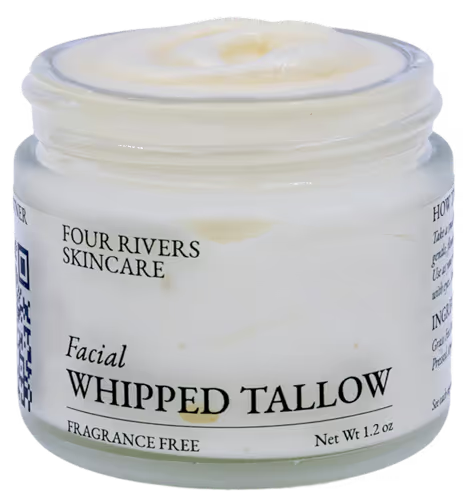
Gentle cleanser. Hyaluronic acid serum on damp skin. Wait 1 minute. Fragrance-Free Facial Tallow on still-moist skin. Wait 5 minutes. Mineral sunscreen.
This routine focuses on hydration and protection. The hyaluronic acid pulls in moisture, and the tallow seals it in while providing its own nourishing benefits. Simple, effective, and done in under 10 minutes.
Antioxidant Protection Routine (Morning)
Gentle cleanser. Vitamin C serum on clean skin. Wait 3 minutes. Niacinamide serum (optional). Wait 1 minute. Fragrance-Free Facial Tallow. Wait 5 minutes. Sunscreen.
This routine maximizes daytime antioxidant protection. The vitamin C and niacinamide work together to fight free radical damage, and the tallow locks them in while adding barrier support.
Anti-Aging Repair Routine (Night)
Gentle cleanser. Retinol serum on clean skin. Wait 10 minutes. Herbal Blend Facial Tallow. Sleep.
This is a powerful nighttime routine. The retinol drives cell turnover and collagen production, and the tallow counters retinol's drying effects while supporting barrier repair. The lavender and frankincense in the Herbal Blend add their own skin-regenerating properties.
Gentle Evening Routine (Sensitive Skin)
Gentle cleanser. Centella asiatica or aloe-based serum. Wait 1 minute. Fragrance-Free Facial Tallow. Sleep.
For sensitive skin that can't tolerate aggressive actives, this simple routine provides calming hydration and barrier repair without irritation risk. The fragrance-free formula ensures no essential oils come in contact with reactive skin.
Exfoliation Night Routine (1 to 2 Times Per Week)
Gentle cleanser. AHA or BHA exfoliant on dry skin. Wait 15 minutes. Hydrating toner or mist. Fragrance-Free Facial Tallow on damp skin. Sleep.
On exfoliation nights, the extended wait before tallow ensures the acids work at their optimal pH. The tallow then provides essential barrier support to skin that's been freshly exfoliated and temporarily more vulnerable.
How Tallow's Occlusive Properties Boost Other Products
Understanding why tallow enhances other products helps you make smarter layering decisions.
Tallow is what dermatologists call an occlusive. Occlusives create a physical barrier on the skin's surface that prevents transepidermal water loss. According to research published in the Journal of Dermatological Treatment, occlusive ingredients can reduce transepidermal water loss by up to 98%, depending on the product and application.
When you layer tallow over active ingredients, it does more than just sit on top. It creates a warm, moist environment between your skin and the tallow barrier that enhances the absorption of the ingredients trapped underneath. Active ingredients that might normally evaporate or be partially wasted get pressed into prolonged contact with your skin.
This is why many people report that their serums seem to "work better" once they switch to tallow as their moisturizer. The serums were always effective, but the tallow's occlusive properties give them more time and better conditions to deliver results.
When to Simplify Your Routine
More products don't always mean better results. If your current routine has five or more steps plus tallow, consider whether all of them are truly necessary.
Tallow itself is remarkably comprehensive. Our grass-fed tallow formulas provide essential fatty acids, fat-soluble vitamins (A, D, E, K), and conjugated linoleic acid. For many people, tallow alone provides sufficient moisture, nourishment, and barrier support without needing additional serums.
If your skin is healthy and your main goals are hydration and maintenance, a simple routine of cleanser plus tallow might be all you need. Adding serums makes sense when you have specific concerns (hyperpigmentation, acne, aging) that tallow alone doesn't address, but not everyone needs a multi-step routine.
Troubleshooting Layering Issues
If you're experiencing problems layering tallow with other products, here are the most common issues and solutions.
Products sliding off after applying tallow: You're likely applying the next product before tallow has fully absorbed. Wait a full 5 minutes after tallow before adding sunscreen or makeup.
Serums feel less effective since adding tallow: Make sure you're applying serums before tallow, not after. If serums go on top of tallow, they can't penetrate the oil barrier to reach your skin.
Skin feels overloaded or congested: You may be using too many products. Try cutting back to cleanser, one serum, and tallow. Add products back one at a time to identify which ones are contributing to the congestion.
Tallow not absorbing well over serums: The serums underneath may not have fully absorbed before you applied tallow. Give each layer adequate time, and consider whether you're using too much of each product.
For more detailed troubleshooting, see our guide on why tallow might not be absorbing and how to fix it.
The Bottom Line
Layering tallow with serums and other active ingredients is straightforward once you understand the basic principle: water-based products first, tallow second, sunscreen last.
The key takeaways are simple. Always apply tallow after water-based serums, not before. Give each product time to absorb before adding the next layer. Use the "buffer" technique with retinol if you have sensitive skin. Don't layer tallow with other oils or heavy creams. Be patient and give the full routine time to show results.
Tallow works beautifully as the moisturizing cornerstone of a thoughtful skincare routine. Whether your routine is two steps or six, positioning tallow correctly ensures it delivers its full nourishing potential while enhancing everything else in your regimen.
Explore our full range of facial tallow formulas to find the right match for your routine, and visit our ingredients page to understand exactly what goes into every jar.