.jpg)
.avif)
.jpg)
Grass-Fed Tallow vs Regular Tallow: Why Source Quality Matters for Your Skin
When you're shopping for tallow skincare, you'll see some products emphasizing "grass-fed" while others don't mention it at all. If you're wondering whether this is just marketing hype or something that actually matters, here's the truth: it matters significantly.
The difference between grass-fed and conventional tallow isn't subtle. It affects nutrient content, fatty acid composition, and ultimately, how well the product works for your skin. Let's break down exactly what you're getting (or missing) with each option.
What "Grass-Fed" Actually Means
First, let's define terms. Grass-fed means the cattle were raised primarily on pasture, eating grass rather than grain-based feed. Some labels say "grass-finished," which means the cattle ate grass in their final months before processing, even if they ate grain earlier in life.
For tallow quality, grass-finished is good. Fully grass-fed (pasture-raised their entire lives) is better. This is because the animal's diet directly influences the nutrient composition of their fat tissue.
It's not about being "more natural" in some vague sense. It's about measurable differences in what ends up in the tallow and on your skin.
The Nutritional Difference: What the Research Shows
Multiple studies have documented the nutritional differences between grass-fed and grain-fed beef fat. The differences are substantial and consistent across research.
Vitamin Content
Grass-fed tallow contains significantly higher levels of fat-soluble vitamins compared to conventional tallow. Research published in the Journal of Animal Science found grass-fed beef contains:
- 2-3 times more vitamin E
- Higher levels of vitamin A precursors (beta-carotene)
- Increased vitamin K2 content
These vitamins aren't just nice extras. Vitamin A supports cell turnover and collagen production. Vitamin E acts as an antioxidant, protecting your skin from environmental damage. Vitamin K2 plays a role in skin elasticity and may help with dark circles and spider veins.
When you choose conventional tallow, you're getting some of these vitamins, but significantly less. It's like choosing between a nutrient-dense meal and empty calories. Both might fill you up, but only one truly nourishes.
Conjugated Linoleic Acid (CLA)
This is where the difference becomes dramatic. Grass-fed beef contains 3-5 times more CLA than grain-fed beef, according to research from Washington State University.
CLA isn't just a fatty acid, it's a potent anti-inflammatory compound. Studies suggest it may help with skin conditions characterized by inflammation, support skin barrier function, and provide antioxidant benefits.
For skincare, this matters tremendously. Chronic low-level inflammation contributes to premature aging, irritation, and various skin concerns. More CLA means more anti-inflammatory support for your skin.
Omega-3 to Omega-6 Ratio
The balance of omega fatty acids affects inflammation in your body and skin. Grass-fed beef has a better omega-3 to omega-6 ratio than grain-fed beef (approximately 1:3 compared to 1:20+).
While you shouldn't rely on tallow as your primary source of omega-3s, this improved ratio means grass-fed tallow is less pro-inflammatory. For skin that's already dealing with dryness, sensitivity, or conditions like eczema, every bit of reduced inflammation helps.
Beyond Nutrition: Quality You Can Feel
The differences between grass-fed and conventional tallow aren't just on paper. They affect how the product performs.
Texture and Absorption
Grass-fed tallow tends to have a slightly different fatty acid profile that affects texture. Many people report it feels lighter and absorbs more readily than conventional tallow.
This isn't placebo effect. The higher levels of certain fatty acids (particularly oleic acid) in grass-fed tallow can improve how easily it penetrates the skin. You get deep moisturization without the heavy, greasy feeling some people experience with conventional tallow products.
Scent
Properly rendered tallow should have minimal scent regardless of source. However, grass-fed tallow typically has a cleaner, less "animal" smell even before rendering.
This means the rendering process can be gentler (less aggressive processing to remove odors), which helps preserve more of the beneficial compounds. Quality rendering matters, but starting with better raw material makes the job easier.
Color
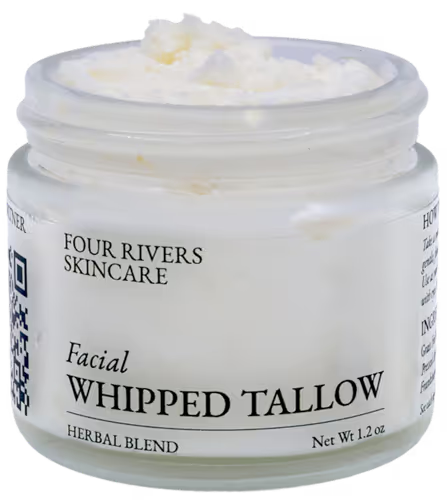
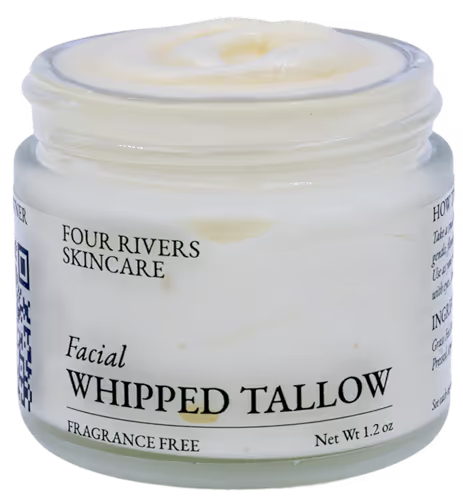
This is one visible difference you might notice. Grass-fed tallow often has a more yellow or cream color compared to the stark white of grain-fed tallow. That yellow tint? It comes from beta-carotene and other fat-soluble compounds.
If your tallow balm is bright white, it's either made from grain-fed tallow or has been heavily processed to remove color (which may also remove beneficial compounds). A slight cream or yellow tint is actually a good sign.
The Cost Difference: Is It Worth It?
Grass-fed tallow products typically cost 30-50% more than conventional options. Let's talk about whether that premium is justified.
What You're Actually Paying For
The higher price reflects several factors:
- Grass-fed cattle require more land and time to raise (18-24 months vs 12-14 months)
- Smaller scale production means less economy of scale
- Quality control and verification add costs
- The tallow itself contains more beneficial compounds
You're not paying for marketing buzzwords. You're paying for measurably better raw material that provides better results.
Cost Per Use Calculation
Here's a perspective shift: even at a higher price point, tallow balm is relatively economical. A 4oz jar of quality grass-fed tallow balm might cost $35-40 but will last 2-3 months with daily use.
That's roughly $0.40-65 per day for your primary moisturizer. Compare that to high-end conventional moisturizers at $100-200+ for 1.7oz, which works out to $1.50-3 per day or more.
The better question isn't whether grass-fed tallow costs more than conventional tallow. It's whether it delivers better results per dollar than any other moisturizer you'd consider. For most people serious about natural skincare, it does.
When Conventional Tallow Might Be Enough
To be fair, conventional tallow isn't worthless. It still has a fatty acid profile compatible with human skin. It still provides moisture and barrier support.
If you're on a very tight budget and conventional tallow is your only access to tallow skincare, it's better than many synthetic moisturizers. The basic structure is still there.
But if you're already investing in natural, clean skincare (and paying the premium those products command), it makes little sense to compromise on the source quality of your primary ingredient.
The Quality Chain: From Pasture to Product
Understanding the full quality chain helps explain why grass-fed matters so much. It's not just about the feed.
Pasture Quality
Grass-fed doesn't automatically mean high quality. The pasture quality matters. Cattle grazing on diverse, mineral-rich pasture in healthy soil produce better tallow than cattle grazing on poor-quality grass.
This is why geographic source can matter. Cattle raised on the rich, fertile pastures of the American Midwest (where our tallow is sourced) have access to nutrient-dense forage that shows up in the final product.
Processing and Rendering
Even the best grass-fed tallow can be ruined by poor processing. The rendering process should preserve nutrients while removing impurities.
Cold-rendering or low-heat rendering preserves more beneficial compounds. High-heat industrial rendering is faster and cheaper, but destroys some of the very nutrients that make grass-fed tallow special.
When evaluating grass-fed tallow products, ask about the rendering process. A brand that emphasizes grass-fed sourcing but won't discuss rendering might be cutting corners where it matters. Learn more about our sourcing and processing standards.
Small-Batch Quality Control
Grass-fed tallow production typically happens at smaller scale. This isn't a disadvantage. Small batches allow for better quality control, gentler processing, and more attention to detail.
Large-scale industrial tallow production optimizes for cost and consistency, not maximum nutrient retention. Small-batch production can optimize for quality.
How to Verify You're Getting Real Grass-Fed Tallow
Unfortunately, "grass-fed" claims aren't always verified. Here's how to increase confidence you're getting the real thing:
Look for Specific Sourcing Information
Brands using actual grass-fed tallow will typically provide details. Where are the cattle raised? What do they eat? Are there any certifications?
Vague claims like "naturally raised" or "sustainably sourced" without specifics should raise questions. Real grass-fed sourcing is something to be proud of and explain in detail.
Check the Color
As mentioned earlier, grass-fed tallow has a cream or slight yellow tint from beta-carotene. Stark white might indicate grain-fed tallow or heavy processing.
Consider the Price Point
While there are exceptions, grass-fed tallow products priced the same as conventional options should raise questions. The raw material costs more, so the finished product typically does too.
Bargain pricing might mean:
- It's not actually grass-fed
- The grass-fed tallow is heavily diluted with other ingredients
- Quality was compromised somewhere in the process
Ask Questions
Reputable brands will answer questions about their sourcing. Where do they get their tallow? Can they verify it's grass-fed? What's their rendering process?
If a brand is defensive or vague about sourcing, consider that a red flag.
The Environmental and Ethical Angle
Beyond personal skin benefits, grass-fed cattle can be raised more sustainably than concentrated animal feeding operations (CAFOs) where most grain-fed beef comes from.
Properly managed grass-fed operations can actually improve soil health, sequester carbon, and support ecosystem biodiversity. This doesn't happen with conventional grain-fed systems.
If you care about environmental impact of your skincare choices, grass-fed tallow from well-managed pastures is significantly better than conventional options. It's also leagues better than most conventional moisturizers derived from petroleum or palm oil.
The Practical Bottom Line
The difference between grass-fed and conventional tallow comes down to this: both will moisturize your skin. One will also nourish it.
Grass-fed tallow delivers:
- 2-5 times more beneficial nutrients
- Better anti-inflammatory properties
- Superior texture and absorption
- Often better scent and color
- More sustainable production practices
If you're already committed to natural skincare and willing to pay for quality, choosing conventional over grass-fed tallow is a false economy. You're paying premium prices but not getting premium ingredients.
Making Your Choice
For most people reading this, the choice is clear. If you've decided tallow is worth trying, grass-fed is worth the extra cost. The difference isn't marginal, it's substantial.
Think of it this way: you wouldn't buy organic vegetables and then cook them in rancid oil. You wouldn't invest in a high-quality mattress but use cheap, uncomfortable sheets. Quality ingredients deserve quality sourcing.
Your skin is your largest organ and your primary barrier against the environment. It deserves the best nourishment you can give it. Grass-fed tallow provides that nourishment in a way conventional tallow simply can't match.
Ready to experience the difference quality sourcing makes? Our grass-fed tallow comes from pasture-raised cattle in the American Midwest. Every batch is small, carefully rendered, and formulated to deliver maximum benefits to your skin.
Explore our complete product line, learn more about why beef tallow works so well for skin, or discover how to choose the right tallow moisturizer for your specific needs.
Your skin knows the difference, even if you don't realize it yet.