.jpg)
.jpg)
.jpg)
Tallow vs Shea Butter for Dry Skin: The Moisture Retention Showdown
If you're dealing with dry skin, you've probably encountered two heavyweight ingredients that appear repeatedly in natural skincare: beef tallow and shea butter. Both are rich, emollient moisturizers with devoted followings. Both promise to nourish and heal parched skin. But when your skin is crying out for relief, which one actually delivers better results?
The answer depends on what kind of dry skin you're dealing with and what you need from your moisturizer. Dry skin isn't a single condition; it's a spectrum that ranges from slightly tight-feeling skin to severely cracked, painful patches that may even bleed. The intensity of your dryness, the underlying causes, and your skin's specific responses all play a role in determining which ingredient will work best for you.
Let's examine these two natural moisturizers from every angle to help you make the most informed choice.
What Makes Each Ingredient Special
Before comparing how they perform, it's important to understand what you're actually working with.
Beef Tallow: Animal Fat for Animal Skin
Beef tallow is rendered fat from cattle, specifically from the protective fat around the kidneys and loins. When this fat is carefully heated and purified, it transforms into a smooth, creamy substance that's remarkably similar to human skin's own oils.
The key word here is "similar." Human sebum and beef tallow share a nearly identical fatty acid profile, which is why tallow has been used for thousands of years as a skin treatment. Your skin recognizes tallow as compatible and absorbs it readily, using its nutrients to repair and strengthen the moisture barrier.
Quality matters enormously with tallow. Grass-fed beef tallow contains significantly higher levels of vitamins A, D, E, and K than grain-fed varieties. These nutrients aren't just nice additions; they're active compounds that support skin health, healing, and regeneration.
Shea Butter: African Gold for Skin
Shea butter comes from the nuts of the African shea tree (Vitellaria paradoxa). It's extracted through a labor-intensive process that traditionally involves roasting, crushing, and kneading the nuts to release their rich fat content.
Shea butter has been used for centuries in West Africa, where it's valued not just for skincare but also for cooking and medicinal purposes. It's known for its thick, creamy texture and its ability to form a protective layer on skin.
Like tallow, quality varies significantly. Unrefined, raw shea butter (often yellow or ivory colored) retains more of its beneficial compounds than refined white shea butter, which has been processed to remove color and scent but also loses some nutritional value in the process.
The Fatty Acid Difference: Why Composition Determines Performance
The effectiveness of any moisturizer for dry skin comes down to its fatty acid composition. These molecules determine absorption, barrier repair, and long-term hydration.
Tallow's Skin-Matching Profile
Beef tallow contains approximately:
- 50-55% saturated fats (primarily palmitic and stearic acid)
- 40-45% monounsaturated fats (primarily oleic acid)
- 3-4% polyunsaturated fats (including linoleic acid)
- Small amounts of palmitoleic acid, an omega-7 fatty acid that's also present in youthful human skin
This closely mirrors the composition of human sebum. According to research published in the International Journal of Cosmetic Science, this similarity allows tallow to integrate seamlessly into the skin's lipid barrier, providing both immediate moisture and long-term barrier support.
For dry skin, this matters enormously. Skin becomes dry when its barrier is compromised and can't retain moisture effectively. By providing fats that match what your skin naturally produces, tallow helps rebuild that barrier from within rather than just coating the surface.
Shea Butter's Plant-Based Richness
Shea butter has a different composition:
- Approximately 45-50% oleic acid (monounsaturated)
- 35-40% stearic acid (saturated)
- 4-8% palmitic acid (saturated)
- 3-5% linoleic acid (polyunsaturated)
- Small amounts of unique compounds including karitene and lupeol
While shea butter doesn't match human sebum as closely as tallow, it has its own strengths. The high oleic acid content makes it deeply moisturizing and easy to spread. The unique compounds like lupeol have demonstrated anti-inflammatory properties in studies, which can help calm irritated dry skin.
Shea butter also contains natural latex and cinnamic acid, which provide some UV protection (though not enough to replace sunscreen). This can be helpful for dry skin that's also dealing with sun damage.
Absorption and Feel: The User Experience
When your skin is dry and uncomfortable, how a moisturizer feels matters just as much as how well it works.
How Tallow Performs on Dry Skin
Quality whipped tallow melts on contact with skin due to its low melting point (around 95-100°F, just below body temperature). This creates an almost magical experience: what starts as a semi-solid balm liquefies instantly when you touch it, then absorbs within 2-3 minutes.
For dry skin, this rapid absorption is beneficial because it means the moisturizing compounds are penetrating into your skin barrier rather than sitting on the surface. You get relief quickly without the greasy residue that can make dry skin feel worse.
Many people with severely dry skin report that tallow moisturizer provides relief that lasts longer than other natural options they've tried. This is likely because tallow isn't just moisturizing the surface; it's actually supporting barrier repair.
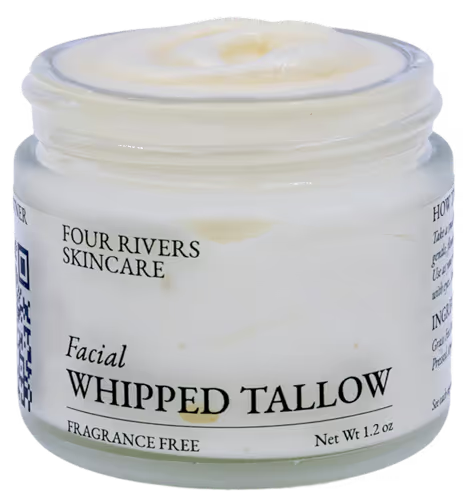
The texture of tallow can vary based on formulation. Pure tallow can feel quite heavy, which is why quality skincare companies often whip it with complementary oils to create a lighter, more luxurious feel. Our Fragrance-Free Facial Whipped Tallow demonstrates this approach: rich enough for dry skin but light enough to absorb quickly.
How Shea Butter Performs on Dry Skin
Shea butter has a higher melting point than tallow (approximately 86-105°F depending on refining), which means it often remains semi-solid during application. You need to warm it between your hands before applying it, and even then, it may feel thicker and more substantial than tallow.
This thickness can be exactly what severely dry skin needs. Shea butter creates a protective occlusive layer that prevents moisture loss throughout the day or night. For skin that's extremely dry or cracked, this protective barrier can be the difference between improvement and continued discomfort.
However, some people find shea butter too heavy, especially if their dryness is mild to moderate. The thicker texture means it takes longer to absorb (typically 5-10 minutes), and it can leave a slightly waxy residue that some find uncomfortable.
The absorption also varies by body area. Shea butter tends to work beautifully on very dry areas like elbows, knees, and feet, but can feel too heavy on facial skin for some people.
Addressing Different Types of Dry Skin
Not all dry skin is the same, and the best choice between tallow and shea butter often depends on what's causing your dryness.
For Dehydrated Skin
Dehydrated skin lacks water, not oil. It can affect even oily skin types. If your skin feels tight, looks dull, and shows fine lines but doesn't necessarily feel rough or flaky, you're dealing with dehydration.
For dehydrated skin, tallow tends to work better because it supports the skin barrier's ability to retain water rather than just preventing evaporation. The fatty acids in tallow help repair the barrier, allowing your skin to hold onto the water you're providing through drinking water and using hydrating serums.
Shea butter can help dehydrated skin by preventing transepidermal water loss (TEWL), but it works better when combined with water-binding ingredients like hyaluronic acid or glycerin first.
For Lipid-Depleted Dry Skin
This is the classic "true dry skin" that lacks oil production. It often feels rough, looks flaky, and may develop cracks in severe cases. This is where both tallow and shea butter excel, though they work slightly differently.
Tallow provides the specific fats your skin needs to rebuild its own oil production. Over time, many people find their skin becomes less dry as the barrier heals and begins functioning better. It's not just treatment; it's repair.
Shea butter provides immediate relief through its rich fat content and protective barrier. While it may not "teach" your skin to produce more oil the way tallow does, it prevents moisture loss so effectively that your skin can start to heal.
For this type of dryness, you might actually benefit from using both, though not necessarily at the same time. Consider tallow during the day when you want something that absorbs quickly, and shea butter at night when you can let its protective barrier work while you sleep.
For Eczema-Prone Dry Skin
Eczema adds inflammation and sensitivity to the equation. Dry, eczema-affected skin needs moisture plus calming support.
Tallow's anti-inflammatory properties come from its fatty acid profile and, in grass-fed varieties, its vitamin content and CLA (conjugated linoleic acid). Many people with eczema report that tallow helps calm flare-ups while providing the deep moisture eczema-dry skin desperately needs.
Shea butter's lupeol content provides anti-inflammatory benefits, and its occlusive properties protect vulnerable eczema-affected skin from irritants and allergens in the environment. Some research suggests that shea butter's cinnamic acid can help with the itching that often accompanies eczema.
Both can work for eczema, but sensitivity varies by individual. Some people with eczema react to the latex-like compounds in shea butter, while others find tallow too rich during active flare-ups. Testing small areas first is essential.
For Aging, Dry Skin
As skin ages, it typically becomes drier due to decreased oil production and a thinning barrier. Add in years of environmental damage, and mature dry skin has multiple needs: moisture, barrier repair, and anti-aging support.
This is where tallow pulls ahead. The natural vitamin A in grass-fed tallow supports cell turnover and collagen production. Vitamin E provides antioxidant protection. Vitamin K helps with elasticity and reduces the appearance of age spots and dark circles.
While shea butter does contain some vitamins and antioxidants, particularly in unrefined forms, the concentration and bioavailability don't match what grass-fed tallow provides.
For mature, dry skin, our Coffee Facial Whipped Tallow combines tallow's benefits with coffee seed oil, which provides additional antioxidants and can improve the appearance of fine lines.
Nutrient Comparison: What Your Dry Skin Is Actually Receiving
Dry skin isn't just thirsty; it's often nutrient-starved. The right moisturizer can deliver compounds that support healing and long-term skin health.
Tallow's Nutritional Advantages
Grass-fed beef tallow provides:
Vitamin A (Retinol): Supports cell turnover, helping dry, flaky skin shed dead cells and reveal healthier skin beneath. Unlike synthetic retinoids, natural vitamin A in tallow is gentler and less irritating.
Vitamin D: Essential for skin barrier function and immune response. Topical vitamin D can help skin defend itself against irritants that worsen dryness.
Vitamin E (Tocopherol): Protects against free radical damage and supports skin healing. Helps prevent the oxidative stress that can worsen chronic dryness.
Vitamin K2: Supports skin elasticity and barrier integrity. Particularly helpful for dry skin that's also showing signs of aging.
Conjugated Linoleic Acid (CLA): An anti-inflammatory compound that's abundant in grass-fed tallow. CLA has been shown to support skin barrier function and reduce inflammation.
These nutrients exist in their natural, fat-soluble forms, which means your skin can use them effectively. They're not synthetic additions; they're inherent to properly sourced tallow.
Shea Butter's Nutritional Profile
Unrefined shea butter contains:
Vitamins A and E: Present in moderate amounts, though less concentrated than in grass-fed tallow.
Allantoin: A compound that soothes irritation and promotes healing. Particularly helpful for cracked, damaged dry skin.
Lupeol and other triterpenes: Natural anti-inflammatory compounds that can help calm irritated skin.
Phytosterols: Plant compounds that can help strengthen the skin barrier and reduce inflammation.
While shea butter is less nutrient-dense than grass-fed tallow, it does offer unique compounds that tallow doesn't provide. The combination of lupeol and allantoin, in particular, makes it excellent for very irritated or damaged dry skin.
Texture Customization: Making Each One Work Better
Neither tallow nor shea butter has to be used straight from the container. Understanding how to customize texture can make either one work better for your specific needs.
Working with Tallow
Pure tallow can feel quite rich, which some people love but others find overwhelming. This is why quality tallow skincare often blends tallow with complementary oils:
Adding liquid oils like jojoba or argan creates a lighter texture that spreads more easily while maintaining tallow's benefits. If you're comparing jojoba oil vs tallow, remember that combining them often gives you the best of both worlds.
Whipping tallow incorporates air, creating a mousse-like texture that feels luxurious and absorbs even more quickly. All of our facial tallow products are carefully whipped for optimal texture.
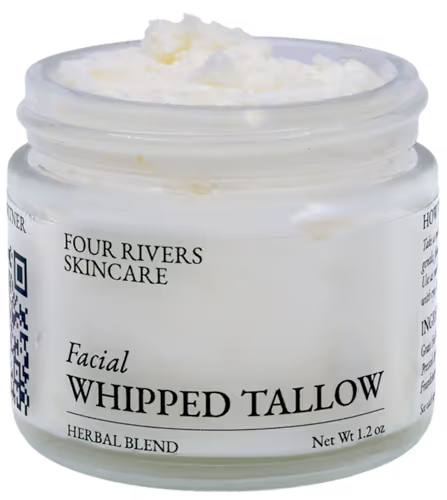
Blending with essential oils or botanical extracts can add additional benefits while keeping the texture pleasant. Our Herbal Blend Facial Tallow adds calming lavender, frankincense, and cedarwood to the tallow base.
Working with Shea Butter
Shea butter's thick texture can be modified too:
Warming between hands before application makes it spread more easily and absorb better.
Mixing with lighter oils creates a more spreadable consistency. Shea butter blends well with sweet almond oil, grapeseed oil, or safflower oil.
Melting and re-whipping shea butter can create a lighter, fluffier texture that's easier to apply, though it may not retain that texture permanently as shea butter can recrystallize.
Shelf Life and Storage: Practical Considerations
When you're investing in natural skincare for dry skin that you'll use daily, practical matters like shelf life and storage are important.
Tallow's Stability
Pure, properly rendered tallow is surprisingly stable. The saturated fats that dominate its composition are resistant to oxidation, which means tallow rarely goes rancid if stored correctly.
At room temperature, properly processed tallow can last 12-18 months. In the refrigerator, it can last even longer. The addition of vitamin E (as we include in all our products) further extends shelf life by providing antioxidant protection.
Signs that tallow has gone bad include an off smell (tallow should smell neutral or very slightly beefy, never sour or rancid), discoloration, or changes in texture. If properly stored away from heat and light, this is rare.
Shea Butter's Longevity
Unrefined shea butter also has excellent shelf life, typically 18-24 months when stored properly. The natural antioxidants in shea butter help protect it from oxidation.
Refined shea butter may have a slightly longer shelf life because the refining process removes some compounds that can oxidize, but it also removes beneficial nutrients.
Shea butter should be stored in a cool, dark place. It can tolerate temperature fluctuations better than some oils, though repeated melting and solidifying may affect its texture (it can become grainy, though this doesn't affect its effectiveness).
Environmental and Ethical Factors
For many people choosing natural skincare, sustainability and ethics influence their decisions.
Tallow's Sustainability Story
Beef tallow is a byproduct of the meat industry. Using it for skincare prevents waste by utilizing a part of the animal that might otherwise be discarded. This "whole animal" approach reduces environmental impact.
When sourced from grass-fed, regeneratively raised cattle, tallow can actually be part of a regenerative agricultural system. Well-managed grazing improves soil health, increases biodiversity, and can even help with carbon sequestration.
The environmental and ethical impact depends entirely on sourcing. Tallow from factory-farmed cattle doesn't carry these benefits, which is why we're completely transparent about why tallow source matters.
Shea Butter's Sustainability Context
Shea butter production provides income for millions of women in West Africa, where shea collection and processing is traditionally women's work. This makes shea butter an important economic resource for communities that often have few other income opportunities.
However, increased global demand for shea butter has created some concerns. In some areas, overharvesting threatens shea tree populations. Not all shea butter is produced under fair conditions; some commercial operations exploit workers rather than supporting them.
Choosing fair-trade, sustainably harvested shea butter helps ensure your purchase supports rather than harms the communities and ecosystems involved in its production.
Cost and Accessibility: The Bottom Line
Let's address practical realities: cost and availability matter, especially when you're dealing with chronic dry skin that requires consistent treatment.
Tallow
Quality grass-fed tallow skincare typically costs more than shea butter products. Small-batch production, specialized sourcing, and careful formulation all contribute to higher prices.
However, tallow is exceptionally rich, so you need very little per application. A 2oz jar can last 2-3 months with daily facial use. When you calculate cost per use rather than cost per jar, tallow becomes more reasonable.
Availability is still limited compared to more mainstream ingredients. You'll find tallow skincare from specialty brands focused on natural, traditional ingredients, but it's not in every store.
Shea Butter
Raw, unrefined shea butter is remarkably affordable, typically costing $10-20 per pound. Even high-quality, fair-trade shea butter remains reasonably priced compared to many skincare ingredients.
You can find shea butter in natural food stores, online retailers, and even some grocery stores. This accessibility makes it easy to try without a major financial commitment.
Many people with dry skin start with shea butter because it's affordable and accessible, then explore other options like tallow if they want more targeted results.
Making Your Decision: Which Is Right for Your Dry Skin?
After examining both ingredients thoroughly, here's how to choose:
Choose tallow if:
- Your dry skin is moderate to severe and needs deep, lasting relief
- You want active skin barrier repair, not just surface protection
- You're dealing with aging skin along with dryness
- You need something that absorbs quickly and doesn't feel heavy
- You value nutrient density and want vitamins A, D, E, and K
- You prefer animal-based skincare for its similarity to human skin
- You want something compatible with other skincare products
Choose shea butter if:
- Your dry skin is severe and needs heavy-duty protection, especially overnight
- You prefer plant-based skincare for ethical or personal reasons
- You want an affordable option for covering large areas of dry body skin
- Your dryness includes inflammation and irritation that needs calming
- You like thicker textures that create a protective barrier
- You want something readily available that you can easily find and replace
- You're willing to take longer for absorption in exchange for maximum protection
Consider using both if:
- You want tallow for daily facial use and shea butter for very dry body areas
- You need tallow's quick absorption during the day and shea butter's protective overnight treatment
- You're dealing with severe eczema that needs both barrier repair and heavy protection
- You want to customize your own skincare by combining different textures and benefits
Beyond Simple Comparison: Understanding What Your Skin Needs
While this article has focused on comparing these two ingredients, choosing between them ultimately comes down to understanding your specific type of dry skin and what it needs to heal.
Sometimes the best answer isn't either-or but both-and. You might use tallow on your face where you want something light and nutrient-rich, and shea butter on your hands, elbows, and feet where extra protection helps.
Or you might find that one works better in summer and the other in winter. Dry skin changes with seasons, hormones, stress, and environment. What works perfectly in June might not be enough in January.
The advantage of natural, simple ingredients is that you can adjust and experiment without worrying about complex formulations or conflicting active ingredients. Both tallow and shea butter play well with other natural skincare products, making them versatile building blocks for a customized routine.
Getting the Most from Your Choice
Whichever you choose, here are strategies to maximize results for dry skin:
Apply to slightly damp skin: Both tallow and shea butter work better when they can seal in moisture. After washing your face or showering, pat skin until it's just damp, then apply your moisturizer.
Use enough: Dry skin needs generous application. Don't skimp. A pea-sized amount isn't enough for a full face if your skin is truly dry.
Be consistent: Dry skin improves with consistent care over weeks, not days. Give your chosen moisturizer at least 2-4 weeks to show its full benefits.
Address underlying causes: Sometimes chronic dryness indicates something more than just needing a better moisturizer. Consider hydration levels, environmental factors, harsh cleansers, and health conditions that might contribute to dryness.
Layer strategically: For very dry skin, consider a hydrating serum or essence underneath your tallow or shea butter. The water-based hydration plus oil-based sealing creates the most effective moisture retention.
Your Skin, Your Choice
Both beef tallow and shea butter are excellent natural moisturizers for dry skin. Neither is universally "better"; they simply offer different benefits that suit different needs, preferences, and skin types.
If you want something that works with your skin's natural composition, absorbs quickly, and provides nutrients along with moisture, grass-fed tallow is exceptional. Our range includes options for every preference:
- Fragrance-Free Facial Whipped Tallow for sensitive dry skin
- Herbal Blend Facial Tallow for added calming benefits
- Intensive Repair Whipped Tallow for severely dry skin that needs maximum support
Your dry skin deserves relief that addresses the root cause, not just the symptoms. Understanding the real differences between natural moisturizers like tallow and shea butter helps you make the choice that will serve your skin best, today and long-term.