.jpg)
.jpg)
.jpg)
Animal Fats vs Plant Oils in Skincare: The Science of Skin Compatibility
Walk into any natural beauty store and you'll find shelves lined with plant-based skincare: argan oil, jojoba oil, coconut oil, shea butter, rosehip oil. Plant oils dominate natural skincare, and for good reason. They're effective, accessible, and align with plant-based lifestyle choices that many people value.
But there's another category of natural skincare ingredients that's gaining attention: animal fats. Tallow, lanolin, and emu oil have been used for thousands of years across cultures, and modern research is beginning to explain why these traditional ingredients work so remarkably well for some skin concerns.
The question isn't which category is "better" in an absolute sense. Rather, it's about understanding the fundamental differences between animal-derived and plant-derived fats, how each interacts with human skin, and why you might choose one over the other for specific skin needs.
The Biological Reality: You Are an Animal
This might seem obvious, but it has profound implications for skincare. Your skin is animal tissue, built from animal proteins and lipids. The sebum your skin produces to protect itself is made from animal fats and waxes.
When you apply a skincare ingredient to your face, your skin doesn't "know" whether that ingredient is ethically sourced, organic, or expensive. What matters biologically is whether the molecular structure of that ingredient is compatible with your skin's own biology.
This is where the animal fat versus plant oil distinction becomes scientifically interesting. While many plant oils can certainly benefit skin, animal fats have a structural advantage: they're built from the same basic components that make up human skin lipids.
Understanding Lipid Composition: The Building Blocks
To understand why compatibility matters, we need to look at what actually makes up these different types of fats.
Human Skin Lipids
Your skin's protective barrier is composed of three main types of lipids:
- Ceramides (50%): Complex molecules that form the "mortar" between skin cells
- Cholesterol (25%): Yes, the same cholesterol that's in your blood, though topical cholesterol is beneficial for skin
- Free fatty acids (25%): Including palmitic acid, stearic acid, oleic acid, and linoleic acid in specific ratios
Additionally, human sebum (the oil your skin produces) contains:
- Triglycerides (41%)
- Wax esters (26%)
- Squalene (12%)
- Free fatty acids (16%)
- Other components (5%)
Research published in the British Journal of Dermatology has demonstrated that the most effective barrier repair comes from providing all three major lipid classes in ratios similar to what naturally exists in healthy skin.
Animal Fat Composition
Animal fats, particularly tallow from grass-fed beef, contain:
- Triglycerides made up of palmitic acid (25-30%), stearic acid (20-25%), and oleic acid (40-45%)
- Small amounts of palmitoleic acid, an omega-7 fatty acid also found in human sebum
- Fat-soluble vitamins (A, D, E, K) in bioavailable forms
- Conjugated linoleic acid (CLA) with anti-inflammatory properties
- Natural cholesterol (in small amounts)
Notice the overlap? The fatty acid profile of animal fats closely mirrors the free fatty acid component of human skin lipids. This isn't coincidence; it's biology. Mammals produce similar lipid structures because these structures serve similar protective functions.
Plant Oil Composition
Plant oils vary widely in composition, but they generally contain:
- Triglycerides made up of different fatty acid combinations depending on the plant
- Polyunsaturated fatty acids (often much higher percentages than in animal fats or human skin)
- Phytosterols (plant version of cholesterol, similar structure but not identical)
- Various vitamins, antioxidants, and phytonutrients specific to each plant
Plant oils can be wonderful for skin, but their fatty acid profiles don't typically match human skin lipids as closely as animal fats do. For example, many plant oils are much higher in polyunsaturated fats than human sebum is.
The Compatibility Question: Does "Similar" Mean "Better"?
The fact that animal fats more closely resemble human skin lipids raises an important question: does this similarity translate to better performance?
Evidence for Enhanced Compatibility
Several lines of research suggest that lipid similarity does matter:
Absorption and Integration: A study in the International Journal of Cosmetic Science found that fatty acids matching those naturally present in skin show enhanced absorption and integration into the skin barrier. The skin appears to recognize these familiar molecules and incorporates them more readily.
Barrier Repair Efficacy: Research on barrier-damaged skin has shown that applying lipids in ratios similar to those in healthy skin produces better barrier repair than random combinations of lipids, even if the individual components are beneficial. Structure and ratio matter, not just the presence of good ingredients.
Inflammatory Response: Some studies suggest that highly polyunsaturated oils, when applied topically, may oxidize more readily and potentially trigger mild inflammatory responses in sensitive individuals. Animal fats, being more saturated, are more stable and less prone to oxidation.
Traditional Use Cases: While not scientific proof, the fact that animal fats have been used cross-culturally for skin healing for thousands of years suggests effectiveness. Traditional remedies don't persist unless they work.
The Nuanced Reality
However, "more compatible" doesn't automatically mean "better for all purposes." Different skin needs call for different solutions:
Plant oils excel at:
- Delivering specific phytonutrients that animal fats don't contain
- Providing lighter textures for oily skin
- Offering specific benefits (like rosehip for vitamin C, argan for vitamin E)
- Serving as carrier oils for essential oils
- Meeting ethical preferences for plant-based skincare
Animal fats excel at:
- Deep barrier repair due to structural similarity
- Delivering fat-soluble vitamins in highly bioavailable forms
- Providing stable, long-lasting moisture
- Working well for severely compromised or damaged skin
- Supporting skin that's lost its ability to produce adequate sebum
The science suggests that animal fats may have a compatibility advantage, but plant oils have their own unique advantages that matter depending on your specific needs and values.
Examining Specific Comparisons
Let's look at how specific animal fats compare to popular plant oils.
Beef Tallow vs Coconut Oil
As explored in our detailed comparison of tallow vs coconut oil, these two ingredients illustrate the compatibility difference:
Tallow's fatty acid profile: 50% saturated, 45% monounsaturated, 5% polyunsaturated. This closely matches human sebum's balance.
Coconut oil's profile: 90% saturated, almost entirely medium-chain fatty acids like lauric acid. This is quite different from human skin lipids.
Despite coconut oil being plant-based and having some beneficial properties, many people find it comedogenic (pore-clogging). Tallow, despite being animal-derived and seemingly richer, often works better for facial skin because of its closer match to sebum.
Beef Tallow vs Jojoba Oil
The jojoba vs tallow comparison shows something interesting: jojoba is actually quite compatible with skin despite being plant-derived.
Why? Jojoba isn't technically an oil; it's a liquid wax ester. Human sebum contains about 25% wax esters. So jojoba's compatibility comes from matching a different component of human sebum than tallow does.
This demonstrates that compatibility isn't just about animal versus plant; it's about molecular structure and how closely that structure matches what your skin naturally produces.
Lanolin vs Shea Butter
Lanolin (wool fat from sheep) contains similar fatty acids to tallow but also includes cholesterol and lanolin alcohols that closely match components in human skin. This makes lanolin exceptionally effective for severe dryness and barrier damage.
Shea butter, while an excellent moisturizer, has a different fatty acid profile than human skin. It's richer in oleic acid than human sebum is and lacks some of the saturated fats that support barrier structure.
As discussed in our tallow vs shea butter comparison, both work well for dry skin, but lanolin and tallow often provide deeper barrier repair because of their closer match to skin lipids.
The Saturation Spectrum: Why It Matters
One of the key differences between most animal fats and many plant oils is their saturation level.
Understanding Saturation
Saturated fats have no double bonds in their carbon chains. This makes them:
- Stable and resistant to oxidation
- Solid or semi-solid at room temperature
- Less likely to go rancid
- Better at forming structured barriers
Monounsaturated fats have one double bond. They're:
- Moderately stable
- Often liquid at room temperature
- Reasonably resistant to oxidation
- Good for both barrier and moisture
Polyunsaturated fats have multiple double bonds. They're:
- Less stable and prone to oxidation
- Always liquid at room temperature
- More likely to go rancid when exposed to air and light
- Important for delivering specific nutrients but risky in high concentrations
Skin Lipid Balance
Human sebum is approximately:
- 45-50% saturated fats
- 40-45% monounsaturated fats
- 5-10% polyunsaturated fats
Many plant oils are much higher in polyunsaturated fats than this natural ratio. For example:
- Sunflower oil: 60-70% polyunsaturated
- Safflower oil: 70-80% polyunsaturated
- Grapeseed oil: 70% polyunsaturated
While these oils can be beneficial in many ways, their high polyunsaturated content means they don't match the saturation ratio that skin naturally maintains. In excess, polyunsaturated fats on skin can oxidize and potentially contribute to inflammation.
Animal fats tend to match the saturation ratio of human sebum more closely:
- Beef tallow: 50% saturated, 45% monounsaturated, 5% polyunsaturated
- Duck fat: 45% saturated, 45% monounsaturated, 10% polyunsaturated
- Emu oil: 40% saturated, 45% monounsaturated, 15% polyunsaturated
This saturation balance matters for barrier stability and long-term skin health.
Vitamin and Nutrient Considerations
Beyond fatty acid profiles, the vitamin and nutrient content differs significantly between animal fats and plant oils.
Fat-Soluble Vitamins in Animal Fats
Grass-fed animal fats naturally contain vitamins A, D, E, and K in their most bioavailable forms:
Vitamin A (Retinol): Animal fats contain true retinol, the active form of vitamin A that skin can use immediately. Plant oils contain carotenoids (provitamin A) that must be converted to retinol, a process that's inefficient for many people.
Vitamin D: Present in animal fats, particularly those from animals raised on pasture with sun exposure. Vitamin D supports skin barrier function and immune response.
Vitamin E: While also present in many plant oils, the form in animal fats (mixed tocopherols) is highly bioavailable and often more stable.
Vitamin K2: Found primarily in animal fats, not plant oils. K2 supports skin elasticity and wound healing.
The bioavailability matters. Having nutrients present doesn't help if your skin can't use them efficiently. The forms found in animal fats tend to be more readily usable.
Unique Plant Compounds
Plant oils offer compounds that animal fats simply don't have:
Phytonutrients: Antioxidants like polyphenols, flavonoids, and carotenoids that provide specific protective benefits
Essential fatty acids: Some plant oils provide gamma-linolenic acid (GLA) and other fatty acids not found in animal fats
Plant sterols: Can help with inflammation and barrier function, though they work differently than cholesterol
Unique vitamins: Like vitamin C in rosehip oil, which isn't present in animal fats
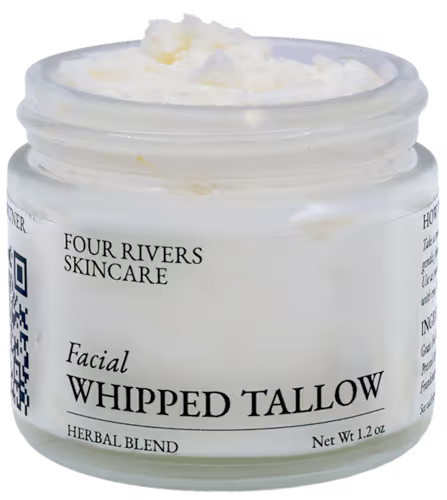
This is why combining animal fats with certain plant oils often produces better results than using either alone. Our Herbal Blend Facial Tallow combines grass-fed tallow with argan and rosehip oils for exactly this reason, providing both the barrier-matching benefits of tallow and the unique nutrients from plant oils.
Skin Condition Suitability: Which Works Better for What?
Different skin conditions may respond better to animal fats or plant oils depending on the underlying issue.
Severely Compromised Barriers (Eczema, Dermatitis, Severe Dryness)
Animal fats often work better because the structural similarity to skin lipids supports actual barrier reconstruction, not just surface moisturization. The combination of matching fatty acids and fat-soluble vitamins addresses both moisture and healing.
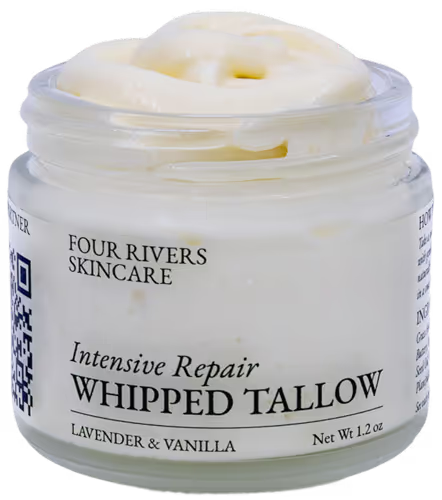
Our Intensive Repair Whipped Tallow combines tallow with lanolin for this reason. Both are animal-derived fats that closely match human skin lipids, providing maximum barrier support.
Oily, Acne-Prone Skin
Certain plant oils often work better, specifically lightweight, non-comedogenic oils like jojoba, squalane (can be plant or animal-derived), or rosehip. These provide moisture without overwhelming already oil-rich skin.
However, properly formulated animal fats can also work. Counter-intuitively, providing skin with fats similar to its own sebum may help regulate overproduction. Light formulations that blend tallow with non-comedogenic oils can benefit some people with oily skin.
Anti-Aging and Mature Skin
Animal fats often provide more targeted benefits due to their vitamin content and support for declining skin lipid production. As we age, skin produces less sebum and the barrier weakens. Providing similar lipids helps support what's naturally declining.
Plant oils rich in antioxidants (like argan, rosehip, or sea buckthorn) also benefit aging skin but in different ways. The ideal approach often combines both: barrier-supporting animal fats plus antioxidant-rich plant oils.
Sensitive, Reactive Skin
Both can work, but simplicity matters most. Sensitive skin often reacts to additives, preservatives, and complex formulations rather than to the base oils themselves.
Single-ingredient products like pure tallow or pure jojoba often work better than complex blends. Our Fragrance-Free Facial Tallow contains only four ingredients (tallow, argan oil, rosehip oil, and vitamin E) for this reason.
Addressing the Environmental and Ethical Dimensions
For many people, the animal versus plant question isn't primarily about efficacy; it's about values.
The Case for Plant-Based Skincare
Plant oils align with:
- Vegan and vegetarian lifestyles
- Animal welfare concerns
- Often lower environmental impact (though this varies greatly by crop and farming method)
- Generally broader availability and lower cost
- Personal values about not using animal products
These are legitimate considerations that matter to many people. Skincare is personal, and your values should influence your choices.
The Case for Animal-Based Skincare
Animal fats can represent:
- Traditional, time-tested remedies with thousands of years of use
- Whole-animal utilization that prevents waste (tallow is a byproduct of meat production)
- Support for regenerative agriculture when sourced from grass-fed animals
- Potentially superior compatibility and efficacy for certain skin conditions
- A connection to ancestral skincare wisdom
When animal fats come from well-sourced, grass-fed animals, they can be part of a sustainable agricultural system rather than adding to environmental problems.
The Practical Middle Ground
Many people find that the either-or framing isn't necessary. You might:
- Use plant oils for most purposes but keep animal-fat products for severe dryness or barrier damage
- Choose plant-based options for everyday care and save richer animal fats for intensive treatment
- Combine both in your routine, using each where it works best
- Make choices based on specific skin needs rather than adhering strictly to one category
The goal is healthy skin aligned with your values, and there are many paths to that goal.
The Formulation Factor: Blending for Best Results
In practical skincare, pure animal fat or pure plant oil is rarely optimal. The best results often come from thoughtful combinations.
Why Blend?
Combining fats and oils allows you to:
- Balance heavier barrier-repair ingredients with lighter texture
- Provide both immediate comfort and long-term healing
- Deliver a broader spectrum of nutrients
- Adjust viscosity and absorption rate
- Meet multiple skin needs simultaneously
Our tallow products demonstrate this approach. Rather than using pure tallow (which would be quite heavy), we blend grass-fed tallow with complementary oils like argan (vitamin E-rich), rosehip (vitamin C and A), or coffee seed oil (antioxidant and firming). This provides tallow's barrier-matching benefits in a texture that most people find more pleasant to use.
The Synergy Principle
Some combinations create synergistic effects where the blend performs better than either ingredient alone. For example:
- Tallow provides barrier-matching fatty acids
- Rosehip oil provides vitamin C and trans-retinoic acid
- Together, they support both barrier repair and cell renewal more effectively than either alone
This is why understanding the animal fat versus plant oil question isn't about choosing one over the other but understanding when each is most beneficial and how they might work together.
Making Informed Choices for Your Unique Skin
After exploring the science, compatibility, and practical considerations, how do you decide what's right for your skin?
Consider Your Primary Skin Concern
If barrier damage is your main issue (severe dryness, eczema, sensitivity to everything), animal fats' structural similarity to skin lipids often provides the most effective repair.
If you need specific targeted benefits (antioxidants, vitamin C, light oil regulation), plant oils may serve you better.
If you're dealing with multiple concerns, a combination approach often works best.
Test and Observe
Regardless of the science, your individual skin's response is the ultimate authority. Some people thrive on plant-based skincare. Others find their chronic skin issues resolve only with animal-fat products. Most people do well with thoughtful combinations.
Give new products at least 2-4 weeks to show results. Barrier repair and meaningful skin changes take time.
Quality Matters Enormously
Whether you choose animal fats or plant oils, quality determines results:
For animal fats:
- Grass-fed sources contain far more nutrients than grain-fed
- Proper rendering removes impurities that can irritate skin
- Fresh products work better than old, potentially rancid ones
For plant oils:
- Cold-pressed, unrefined oils retain more beneficial compounds
- Proper storage prevents oxidation
- Organic sourcing avoids pesticide residues
Poor-quality versions of either category will disappoint. High-quality versions of both can transform skin.
Understanding the Bigger Picture
The question of animal fats versus plant oils in skincare touches on biology, chemistry, tradition, ethics, and personal values. The science suggests that animal fats have a compatibility advantage due to their similarity to human skin lipids, but this doesn't invalidate plant oils' many benefits or the legitimate reasons people prefer plant-based options.
What matters most is understanding how these different categories of ingredients work, when each provides advantages, and how to make informed choices based on your specific needs, values, and skin's responses.
Your skin is remarkably adaptable. It can benefit from thoughtfully chosen plant oils, carefully sourced animal fats, or strategic combinations of both. The key is moving beyond simplistic either-or thinking to understand the nuanced reality of how different natural ingredients interact with your unique skin biology.
For those who want the barrier-repairing, nutrient-dense benefits that animal fats provide, grass-fed tallow offers remarkable skin compatibility. Our formulations combine this ancient ingredient with modern understanding:
- Fragrance-Free Facial Tallow for sensitive skin
- Herbal Blend Facial Tallow for added botanical benefits
- Coffee Facial Tallow for anti-aging focus
- Intensive Repair Tallow for severe dryness and barrier damage
Your skincare choices should reflect both what science suggests works best and what aligns with your personal values. Understanding the fundamental differences between animal fats and plant oils empowers you to make those choices wisely.